Learn about the bearish pennant, a key technical analysis pattern. Explore the bearish pennant pattern, bear pennant, and bear pennant pattern to understand their significance in stock trading. Discover how the pennant pattern and descending pennant pattern signal potential market trends, including the descending pennant pattern in stocks.
In technical analysis, one of the most reliable continuation patterns is the bearish pennant pattern. Often appearing after a strong downward move, this chart pattern signals the potential for further bearish momentum. In this article, we will explore what the bear pennant is, how to identify it, and how to trade it effectively using the descending pennant pattern in stocks.

What is the Bearish Pennant?
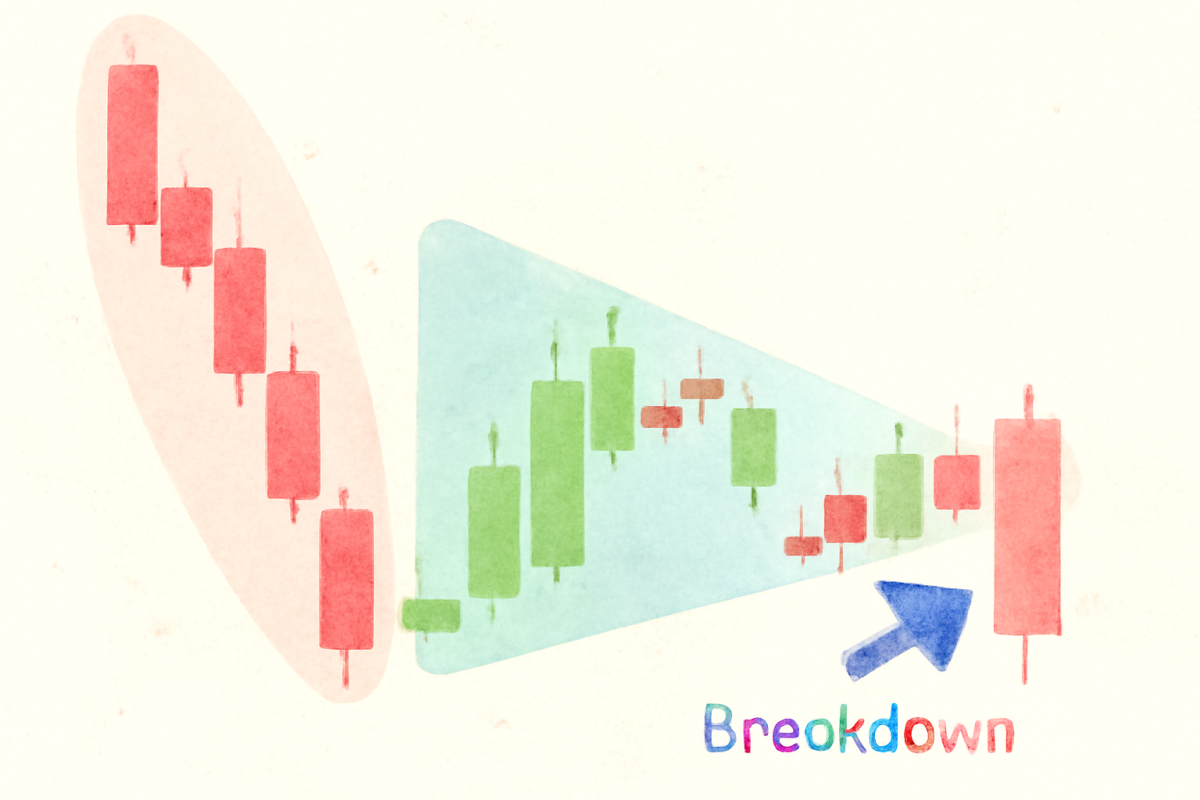
A bearish pennant is a continuation pattern that forms during a downtrend and signals the continuation of the trend. It typically consists of three main components:
- Flagpole: A sharp and steep decline that marks the beginning of the pattern.
- Pennant: A small symmetrical triangle or wedge that forms as the price consolidates, marked by lower highs and higher lows.
- Breakout: After the consolidation, a breakout to the downside confirms the continuation of the downtrend.
This formation occurs in a relatively short period and is often accompanied by a decrease in volume during the consolidation phase. Once the price breaks below the lower boundary of the pennant, traders often see it as a signal to enter a short position.
Key Characteristics of the Bear Pennant Pattern
To properly identify a bear pennant pattern, there are a few key characteristics to look for:
1. Flagpole (Strong Downtrend)
- The initial move down, or the flagpole, should be sharp and significant. It signals that bearish momentum is strong in the market.
- A bear pennant will not form unless there has been a clear downtrend first. A flagpole typically represents at least a 5-10% drop from the previous high.
2. Pennant (Consolidation Phase)
- The pennant pattern forms as price consolidates into a small triangle or wedge, with the trendlines converging.
- During this phase, volume typically decreases as market participants wait for a clear signal in the form of a breakout.
3. Breakout to the Downside
- The most crucial part of the pattern is the breakout. The price should break below the lower trendline of the pennant, typically on increased volume, signaling the continuation of the downtrend.
Trading the Bearish Pennant Pattern
The bearish pennant offers a clear entry and exit strategy for traders. Here’s how to trade it effectively:
Step 1: Confirm the Flagpole
- The first step is to ensure that the pattern is preceded by a strong downtrend. The flagpole should show a sharp decline, typically of at least 5-10%.
Step 2: Wait for the Consolidation
- After the sharp decline, price will enter a consolidation phase. Look for converging trendlines that form a symmetrical triangle or wedge. This is the pennant pattern.
Step 3: Enter on the Breakout
- The most effective strategy is to wait for the price to break below the lower trendline of the pennant. This confirms the bear pennant and signals the continuation of the downtrend.
Step 4: Set a Stop-Loss
- Place a stop-loss just above the upper boundary of the pennant or the most recent high. This helps protect against potential false breakouts.
Step 5: Target the Flagpole Height
- Measure the height of the flagpole (the initial downtrend) and project that distance downward from the breakout point. This gives you a potential price target for the trade.
Why the Bear Pennant Pattern is Important in Stock Trading
The bearish pennant pattern is particularly useful in stock trading for several reasons:
- Clear Continuation Signal: Unlike reversal patterns, the bear pennant indicates that the prevailing downtrend is likely to continue, offering a low-risk entry point for short traders.
- Defined Entry and Exit: The breakout below the pennant provides a clear entry point, and the flagpole height offers a reliable price target.
- Versatility Across Timeframes: This pattern can be used in multiple timeframes, from intraday trading to longer-term setups. It is effective in both day trading and swing trading.
Common Mistakes to Avoid When Trading Bearish Pennants
While the bear pennant is a reliable pattern, traders must be aware of some common mistakes:
- Premature Entry: Entering the trade before the breakout can result in false signals. Wait for confirmation by the breakout below the pennant.
- Ignoring Volume: Volume plays a key role in confirming the pattern. If there’s no significant volume increase during the breakout, the pattern may not be reliable.
- Neglecting Risk Management: Without a clear stop-loss or risk management strategy, traders may expose themselves to unnecessary losses.
- Pattern Failure: In some cases, the pattern may fail. If price breaks out but quickly reverses, consider exiting the trade and reevaluating the setup.
Bearish Pennant vs. Bear Flag: What’s the Difference?
It’s essential to differentiate between the bear pennant and the bear flag. Both are continuation patterns but differ in their formation:
- A bear flag forms when the price consolidates in a rectangular shape (parallel lines), while a bear pennant forms as a converging triangle.
- The bear flag usually has a more gradual retracement, whereas the bear pennant shows more symmetry.
Frequently Asked Questions (FAQs)
What is the difference between a bearish pennant and a bear flag?
- A bear pennant forms a converging triangle during consolidation, while a bear flag has parallel trendlines. Both are continuation patterns but with different chart structures.
How reliable is the bear pennant pattern for stock trading?
- The bear pennant pattern is highly reliable when confirmed by volume and proper breakout. It is widely used by traders as a continuation signal during downtrends.
Can the descending pennant pattern appear in all markets?
- Yes, the descending pennant pattern can be applied across various financial markets, including stocks, forex, and commodities.
How do I trade the bear pennant pattern effectively?
- To trade the bear pennant, wait for the breakout below the pennant, set a stop-loss just above the upper trendline, and use the flagpole height to set your price target.
What volume should I look for when trading a bearish pennant?
- Look for increasing volume during the breakout. A strong breakout with higher volume confirms the bearish pennant pattern and increases the probability of a successful trade.
Conclusion Bearish pennant
The bearish pennant pattern is a powerful tool for traders looking to capitalize on continued downward movement in the market. By understanding how to identify the pattern, set proper entry and exit points, and manage risk effectively, traders can increase their chances of success. Whether you are trading stocks, forex, or commodities, the bear pennant pattern offers a clear strategy for navigating bearish markets.

