Follow the etf crypto smart money. Monitor daily etf inflows, BTC inflows, and crypto etf flows to anticipate the next major market cycle.
In the dynamic world of digital finance, the arrival of exchange-traded funds has marked a turning point in how big capital interacts with digital assets. The approval of a spot etf crypto opened the floodgates of Wall Street, changing the rules of the game forever.
It is no longer enough to analyze conventional candlestick charts or social media sentiment; today, to have a real competitive edge and anticipate massive market movements, tracking where institutional money is heading is absolutely essential.
This is where advanced metric analysis and daily tracking of fund activity come into play.
ETF Flow Map 🗺️
Metrics in millions of USD (M)
Estimated Historical Performance 📊 Price: $0
Calculated based on the history of flows and daily close price.
ETF Flow Intelligence
Real-time institutional flow monitoring
Returns and ETFs
Advanced analytics with Dual engine (Gregorian / Hebrew), Moon Phases, and ETF Activity.
Data Range
N/A
Selected Year ROI
N/A
Selected Month ROI
N/A
Daily Volatility (Year)
N/A
Avg. Upside / Downside
Daily Volatility (Month)
N/A
Avg. Upside / Downside
Most Bought ETF
N/A
In the month
Most Sold ETF
N/A
In the month
Top Gainer ETF
N/A
Impact in the month
Top Loser ETF
N/A
Impact in the month
Top Buy Day (Month)
N/A
Top Sell Day (Month)
N/A
Top Buy Day (Hist.)
N/A
Top Sell Day (Hist.)
N/A
Best Day (Year)
N/A
Worst Day (Year)
N/A
Best Month (Hist.)
N/A
Worst Month (Hist.)
N/A
Best Day (Hist.)
N/A
Worst Day (Hist.)
N/A
Overview
What is the Real-Time Data Telling Us?
To make informed decisions, you need to visualize the direct impact of capital. Below, we present our interactive returns and metrics dashboard, designed to track market volatility and key movements. Montecarlo Trading?
The Power of ETF Inflows: Reading the Smart Money
When we talk about etf inflows, we are referring to the fresh capital that institutions and traditional investors are injecting into these funds. Unlike retail trading, institutional capital usually has a medium-to-long-term vision.
Observing a sustained volume of these inflows provides critical signals about the health and trend of the market:
- Direct buying pressure: Every dollar that goes into a physically-backed ETF forces the fund issuers to buy the underlying asset on the open market, driving the price upward.
- Supply shock: Massive BTC inflows quickly absorb the available coins on exchanges. When institutional demand exceeds the daily issuance from miners, a scarcity environment is created that historically precedes strong bullish cycles.
- Price support: During days of high volatility or general market corrections, constant ETF inflows act as a cushion, absorbing selling pressure and establishing new price “floors.”
Strategies for Monitoring Crypto ETF Flows
Tracking crypto etf flows (total flows, which include both inflows and outflows) is what separates novice investors from professional analysts. It is not just about seeing if the number is green or red, but understanding the context.
To leverage this information, consider the following points in your daily analysis:
- Trend divergences: If the asset’s price drops but the ETF flows remain net positive, it could indicate short-term manipulation or an excellent buying opportunity (institutions are “buying the dip”).
- Volume by issuer: Not all funds carry the same weight. Monitoring which specific asset manager (like BlackRock or Fidelity) is leading the inflows helps you gauge overall institutional confidence.
- Time correlation: Institutional flows are typically reported at the close of traditional markets. Anticipating the release of this data can give you an edge in positioning yourself before the Asian market opens.
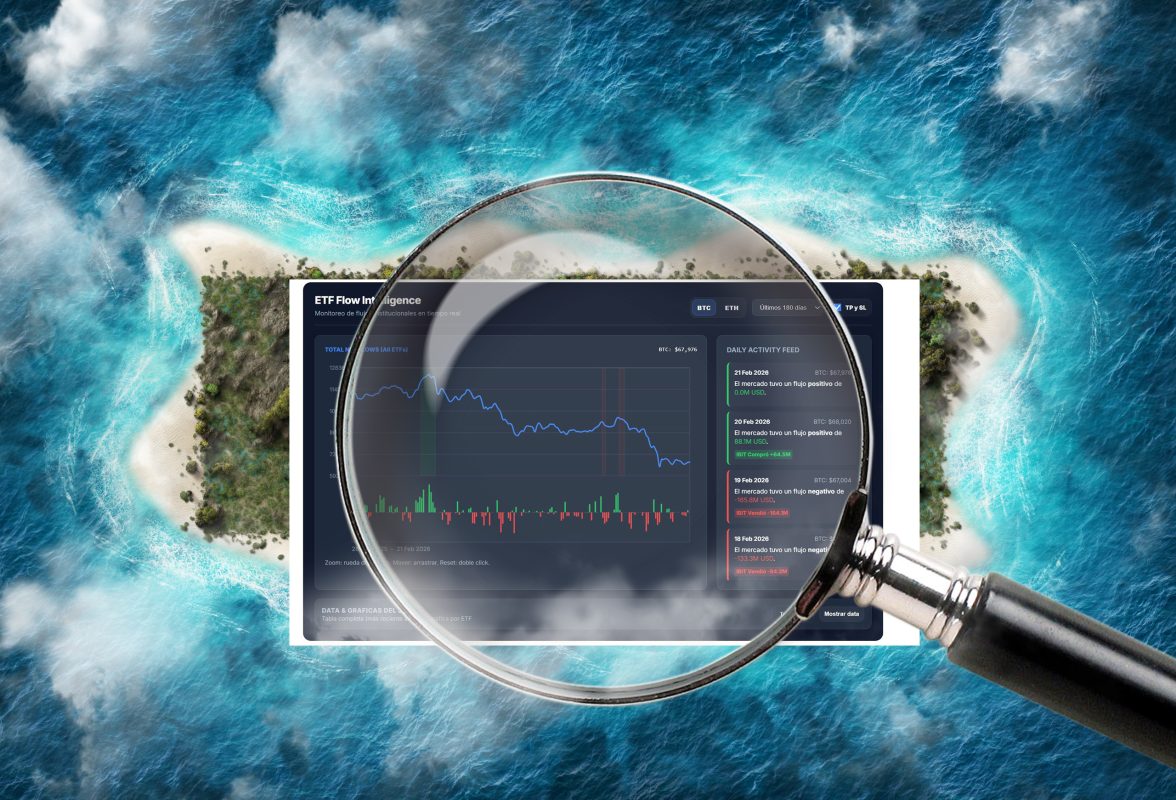
etf inflows,
BTC inflows
Frequently Asked Questions (FAQ)
What exactly is an etf crypto?
It is an investment fund that trades on traditional stock exchanges and tracks the price of one or more cryptocurrencies. It allows investors to gain exposure to the digital market without having to manage private keys, wallets, or register on cryptocurrency exchanges.
Why are daily BTC inflows so important?
Bitcoin inflows represent pure institutional adoption. As the dominant asset, large capital injections into its ETFs usually act as the engine that pulls the rest of the market (altcoins) upward.
Where can I check updated crypto etf flows?
You can track them using advanced analytical dashboards like the one provided on this page, which allows you to cross-reference daily performance data, market anomalies, and the buy/sell volume of the most important funds.
What happens if there are massive outflows from an ETF?
Outflows indicate that fund investors are selling their shares. The ETF issuer must liquidate the underlying asset to return their money. If these outflows are prolonged and high in volume, they can generate significant selling pressure and push the price downward.
What does ETF stand for?
The acronym ETF stands for Exchange Traded Fund. Basically, the term refers to an investment fund that pools capital from many investors to buy an asset (or a basket of assets), and its shares are bought and sold on traditional stock markets throughout the trading day.
What is an ETF and how does it work in the digital world?
An ETF is an investment vehicle designed to track and replicate the performance of an underlying asset, an index, or a commodity. In the case of a crypto etf, the fund physically buys and stores cryptocurrencies (like Bitcoin or Ethereum). The value of the ETF shares goes up or down based on the price of that cryptocurrency in the market. In other words, it acts as a “mirror” of the underlying digital asset’s price.
How do you buy an ETF?
Buying an ETF is an identical process to purchasing shares of a publicly traded company (like Apple, Tesla, or Microsoft). To do it, you need to:
- Open an account with a traditional broker or brokerage firm (such as Fidelity, Vanguard, Charles Schwab, or a regulated local platform in your country).
- Fund the account by depositing fiat money (dollars, euros, pesos, etc.).
- Search for the ticker or symbol of the ETF (for example, IBIT or FBTC for Bitcoin ETFs or BTC inflows).
- Execute a buy order, specifying the number of shares or the amount of money you wish to invest.

